When building or renovating a house, choosing the right material is not only about how it looks on the day it is installed. A good building material should also be durable, practical, easy to maintain and capable of fitting into the overall character of the home.
This is one of the reasons natural stone continues to be popular in residential architecture. While marble and granite are familiar choices for Indian homes, another natural stone is increasingly being considered for contemporary houses: basalt stone.
Known for its deep grey to black appearance, strength and natural texture, basalt can give a house a very different character. It can be used as basalt stone flooring, exterior paving, wall cladding, steps, pathways, courtyards and selected interior surfaces. Depending on the finish, the same stone can look sophisticated and polished or raw and architectural.
For homeowners who want something more distinctive than conventional tiles, basalt stone can be an interesting choice.
What Is Basalt Stone?
Basalt is a natural volcanic rock formed when lava cools and solidifies relatively quickly at or near the Earth’s surface. It is generally fine-grained and commonly appears in shades ranging from dark grey to charcoal and black.
Its natural colour is one of its most noticeable characteristics. Unlike stones that depend heavily on prominent veins or patterns, basalt usually offers a more restrained appearance. This makes it particularly suitable for homes where the architecture, furniture, greenery or other materials are intended to remain the focus.
The appearance of basalt can change considerably depending on the surface finish.
A polished finish can produce a darker, more refined appearance, while honed surfaces offer a softer matte look. Flamed, bush-hammered or other textured finishes can make the stone more suitable for outdoor areas where additional surface texture is desirable.
This versatility is an important reason basalt is used in both modern and more traditional architectural settings.
Why Consider Basalt Stone for a House?
Choosing stone for a home is a long-term decision. Flooring, steps, outdoor paving and wall cladding are not materials that homeowners generally want to replace every few years.
Basalt has several characteristics that make it worth considering for residential construction.
1. A Strong and Durable Natural Material
One of the biggest advantages of basalt is its strength. It is a hard natural stone and can be used in areas that experience regular foot traffic and outdoor exposure.
For a house, this makes basalt suitable for applications such as:
- Entrance areas
- Flooring
- Staircases and steps
- Driveways
- Garden pathways
- Courtyards
- Verandahs
- Outdoor seating areas
- Exterior wall surfaces
The exact suitability depends on the stone specification, thickness, finish, installation method and application, so these factors should always be considered before ordering the material.
2. A Distinctive Black and Grey Appearance
If you want to create a modern house with a strong material palette, black basalt stone can add depth without relying on decorative patterns.
It works particularly well with materials such as:
- Natural wood
- Glass
- Concrete
- White or beige walls
- Metal
- Green plants
- Light-coloured natural stones
For example, a house with light exterior walls can use dark basalt around the entrance or plinth to create contrast. Similarly, a garden pathway made from dark stone can create a visual connection between the house and landscape.
The result does not necessarily have to look “luxurious” in the traditional sense. Basalt can also create a quiet, earthy and contemporary appearance.
3. Different Finishes Create Different Looks
One of the mistakes homeowners sometimes make is choosing a stone only by its colour.
With natural stone, the finish can change the entire appearance.
A polished basalt stone has a smoother and more reflective appearance and can be considered for selected indoor applications.
A honed basalt finish provides a smooth but less reflective surface, making it suitable for a more understated contemporary look.
A flamed or textured finish can be useful for outdoor applications where a more tactile surface is preferred.
A natural or split-face finish can retain more of the original character of the stone and can work particularly well for feature walls and rustic or contemporary exterior designs.
Therefore, when selecting basalt stone for a house, it is useful to compare actual samples rather than making a decision based only on photographs.
Basalt Stone Flooring for Houses
One of the most interesting residential applications of basalt is flooring.
Natural stone flooring has been used in Indian homes for generations, and contemporary architects continue to use stone because it provides both visual character and durability. Recent Indian residential projects have also demonstrated how dark stones such as basalt can be incorporated into interior and exterior spaces.
Basalt Flooring in the Living Room
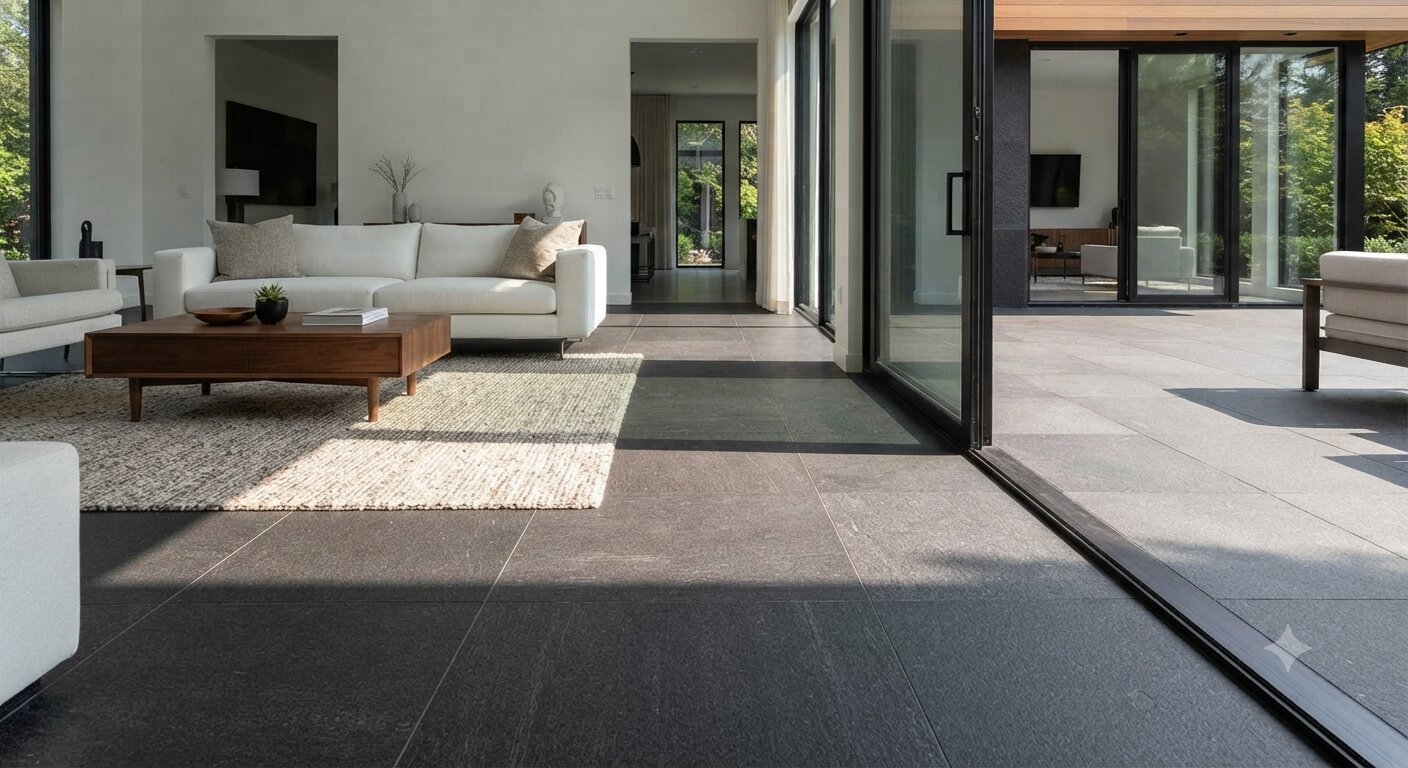
A large-format dark basalt floor can give a living room a clean and grounded appearance.
Because basalt generally has a relatively restrained colour variation, it can work well with minimalist furniture. Wooden furniture, neutral upholstery and indoor plants can prevent the room from feeling too dark.
For a brighter room, basalt flooring can be combined with large windows, lighter walls and warm lighting.
The important point is balance. If every surface in the room is dark, the space can feel visually heavy. Using basalt on the floor while keeping walls, ceilings and larger furniture pieces lighter can create a much more comfortable result.
Basalt Flooring in the Entrance
The entrance of a house is one area where basalt can make a particularly strong impression.
A dark stone floor can visually define the entrance while creating a transition between the outdoor and indoor spaces.
Basalt can also be combined with a wooden main door, stone wall, planters and warm lighting for a natural contemporary entrance.
Basalt in Kitchens
Basalt can also be considered for selected kitchen surfaces and flooring, depending on the specific stone and finish.
However, kitchens are demanding environments. Spills, grease, cleaning products and moisture mean that the stone should be selected according to its technical properties and intended use.
Rather than choosing a material simply because it looks attractive, homeowners should discuss absorption, maintenance, sealing requirements and finish with the stone supplier and designer.
Basalt in Bathrooms
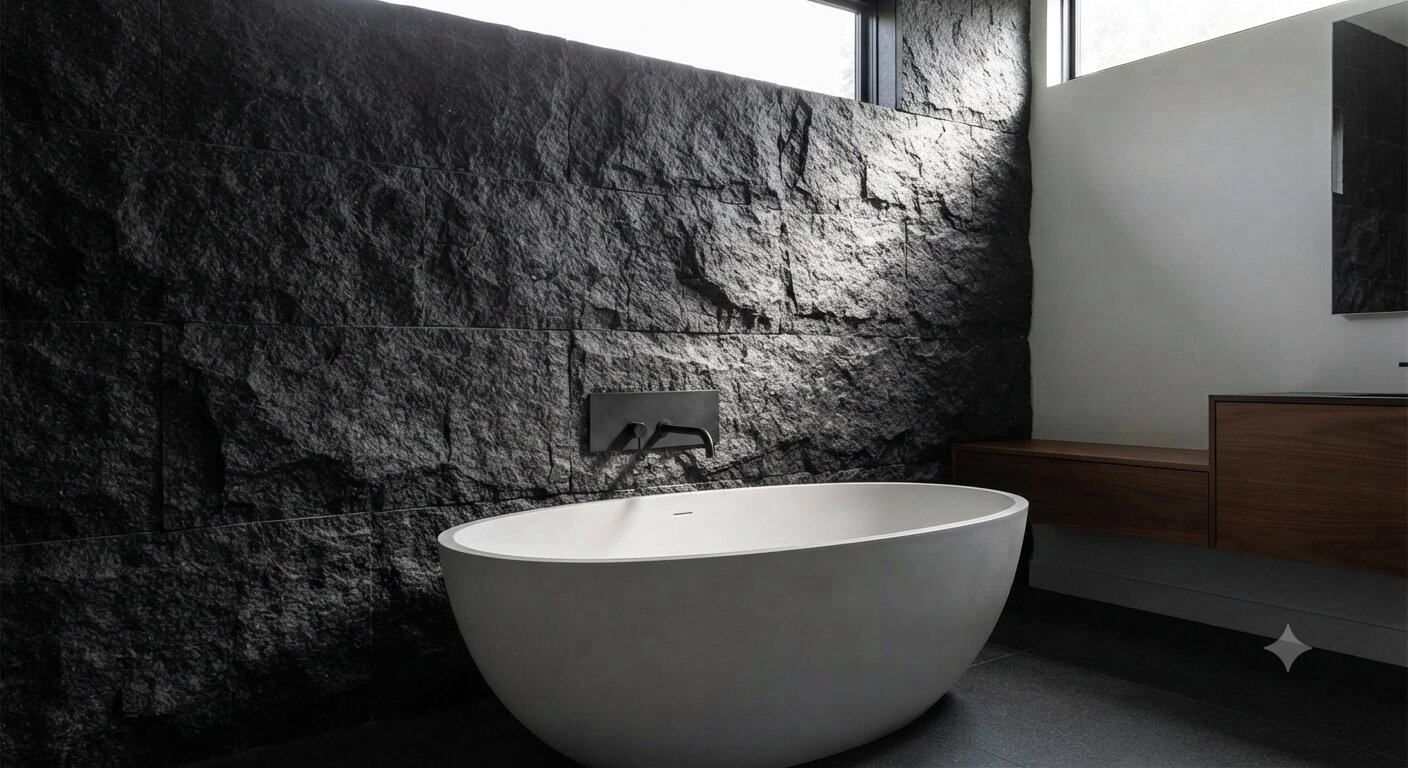
Dark natural stone can create a striking bathroom.
Basalt can be used selectively for flooring, wall surfaces or other architectural details. A matte or textured finish may be preferable in areas where slip resistance is an important consideration.
Again, the finish matters as much as the stone itself. A surface suitable for a dry wall should not automatically be assumed to be appropriate for a wet floor.
Using Basalt Stone on Exterior Walls
Basalt is not limited to flooring.
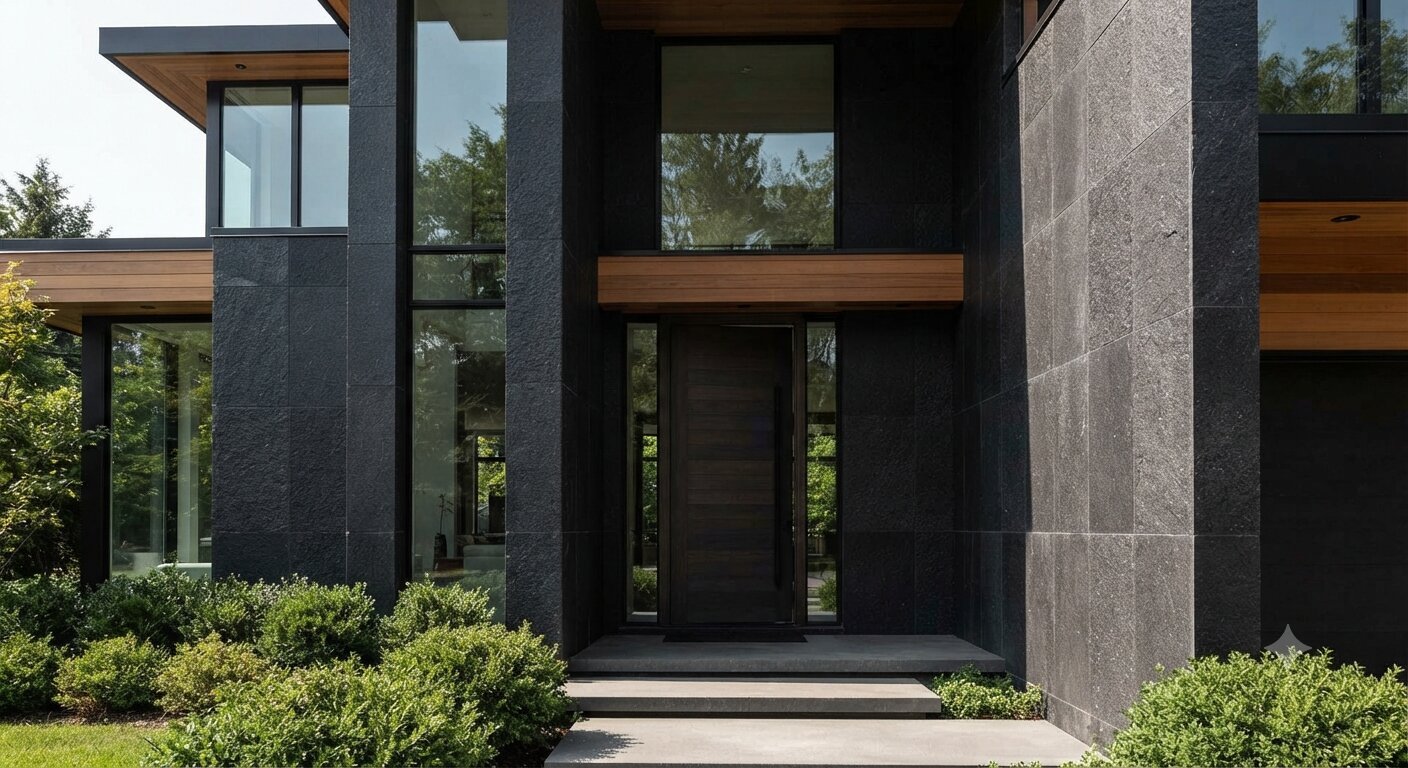
One of the most attractive ways to use it in a house is as basalt stone wall cladding.
Instead of covering the entire exterior with stone, homeowners can use basalt selectively.
For example, basalt can be used on:
- The main entrance wall
- Boundary walls
- Porch walls
- Staircase walls
- Exterior columns
- The area around the main door
- Garden walls
- A feature wall facing the courtyard
This approach allows the stone to become an architectural element rather than simply another finishing material.
A textured basalt wall can look particularly effective when sunlight falls across its surface. The small changes in texture and shadow can make the wall appear different throughout the day.
This is one reason natural stone often feels different from printed tiles or completely uniform manufactured surfaces.
Basalt Stone for Outdoor Areas
A house is not only made up of bedrooms, living rooms and kitchens. Outdoor spaces are becoming increasingly important in residential design.
Courtyards, gardens, verandas, balconies, pathways and outdoor seating areas can all be designed as extensions of the home.
Basalt stone can be used in many of these areas, provided the correct finish and specification are selected.
Basalt for Garden Pathways
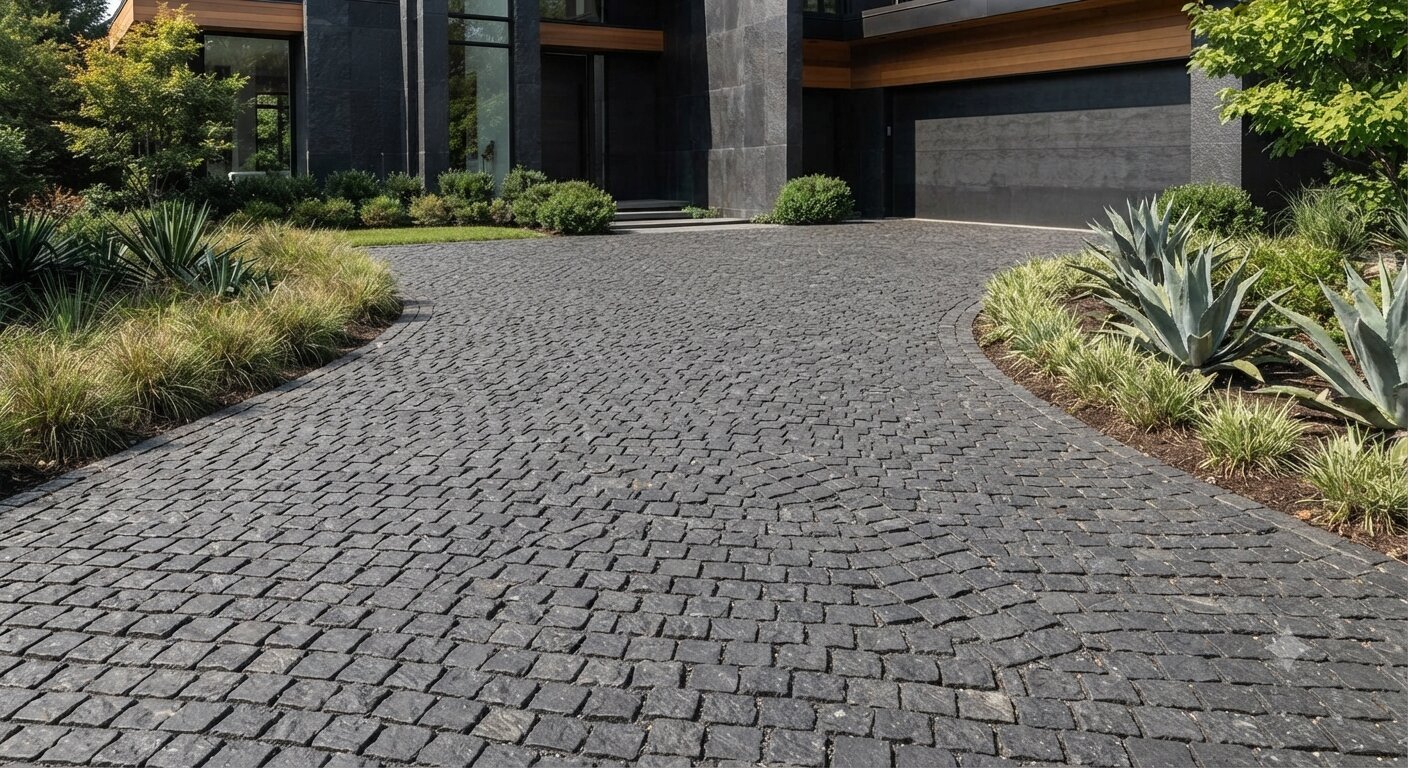
A basalt pathway can provide a strong contrast against grass, plants and lighter landscaping materials.
Large rectangular pieces can create a modern appearance, while irregular or smaller pieces can give a more natural garden character.
Basalt for Driveways
Driveways need materials that can handle regular loads and outdoor conditions.
Basalt is used in paving applications because of its strength, but the correct thickness, installation system, surface finish and structural preparation are essential.
For a driveway project, it is therefore better to discuss the application with the supplier before selecting the final stone format.
Basalt for Courtyards and Verandas
Courtyards are another excellent application.
A dark stone courtyard surrounded by plants, wood and natural plaster can create an earthy atmosphere. The same material can also be continued from an indoor space into a verandas or semi-open area to visually connect the two zones.
This indoor-outdoor continuity is increasingly used in contemporary Indian homes.
Basalt Stone and Modern House Design
One reason basalt has become interesting to architects and homeowners is its ability to fit into different design styles.
Modern Minimalist House
For a minimalist house, large basalt surfaces can provide depth without introducing excessive pattern.
Pair black or dark grey basalt with:
- White walls
- Simple furniture
- Large glass windows
- Natural wood
- Clean architectural lines
Contemporary Indian House
Basalt can also work with more traditional Indian materials.
A home can combine basalt with sandstone, Kota stone, wood, exposed brick or traditional handcrafted elements.
This creates a material palette that feels Indian without looking dated.
Industrial-Style House
For an industrial-inspired home, textured basalt works naturally alongside exposed concrete, steel, glass and wood.
The rough texture of the stone can soften the harder appearance of concrete and metal.
Nature-Inspired House
Basalt is especially suitable for homes designed around gardens, courtyards and natural landscapes.
Its dark colour contrasts beautifully with greenery, while its natural origin supports an overall earthy material palette.
Is Basalt Stone Better Than Tiles for a House?
There is no single answer because the right material depends on the requirements of the project.
Tiles offer a wide variety of colours, patterns, sizes and price points. They can also be easier to replace individually.
Natural basalt, on the other hand, offers the character of real stone. Every project can have subtle variations in colour, texture and appearance, and the material can age differently from a printed or manufactured surface.
For homeowners choosing between basalt and tiles, the decision should consider:
- Budget
- Location of use
- Expected foot traffic
- Surface finish
- Maintenance
- Installation requirements
- Desired appearance
- Availability of required sizes
- Long-term design preferences
The cheapest material is not necessarily the most economical if it needs to be replaced or does not provide the desired performance.
How Much Does Basalt Stone Cost?
One of the most common questions from homeowners is: What is the price of basalt stone?
There is no single fixed price because the final cost can vary according to several factors.
These include:
- Stone quality
- Thickness
- Size
- Finish
- Quantity
- Cutting requirements
- Edge treatment
- Packaging
- Transportation
- Location of delivery
Market listings in India show substantial variation between different basalt products and finishes, which is why homeowners should compare quotations based on the complete specification rather than only the price per square foot.
For a house project, ask the supplier to clearly mention the stone type, dimensions, thickness, finish, quantity, transportation and applicable taxes in the quotation.
This makes it much easier to compare two suppliers fairly.
How to Choose the Right Basalt Stone for Your House
Before placing a large order, consider the following points.
1. Decide Where the Stone Will Be Used
Basalt for a living room floor may require a different finish from basalt intended for an outdoor pathway.
Start with the application rather than the colour.
2. Choose the Finish Carefully
Do not choose the finish only because it looks attractive in a showroom.
Consider whether the surface will be exposed to water, dust, heavy traffic, sunlight or outdoor weather.
3. Check the Thickness
The required thickness depends on the application.
Standard interior flooring and heavy-duty outdoor paving may have different requirements. Your architect, contractor or stone supplier should help determine the appropriate specification.
4. Ask for a Physical Sample
Photographs can be misleading.
Lighting, camera settings and screen displays can alter the appearance of black and grey stone. A physical sample allows you to see the actual colour and texture.
5. Buy From a Reliable Supplier
A reliable natural stone supplier should be able to provide information about available sizes, finishes, thicknesses, quantities and delivery.
For a large house project, consistency is also important. Ask how the material will be selected and packed before dispatch.
How to Maintain Basalt Stone
Natural stone does not mean maintenance-free stone.
The maintenance requirement depends on the finish and application, but some general practices can help preserve the appearance of basalt.
Regular sweeping or dust removal prevents abrasive particles from remaining on the surface.
For routine cleaning, use a suitable stone-cleaning method rather than harsh chemicals unless the stone manufacturer specifically recommends them.
Spills should ideally be cleaned rather than being left on the surface for long periods.
In some applications, sealing may be recommended. Whether sealing is required depends on the particular stone, finish and location.
For outdoor surfaces, regular cleaning can also help prevent dirt and organic growth from changing the appearance of the stone.
Common Mistakes to Avoid When Buying Basalt Stone
Choosing a natural stone based only on photographs is one of the most common mistakes.
Another mistake is selecting the same finish for every part of the house. Indoor flooring, outdoor paving and decorative wall cladding can have very different requirements.
It is also important not to compare suppliers only by the quoted price per square foot. A lower price may correspond to a different thickness, finish, size or grade.
Always compare like-for-like specifications.
Finally, order enough material after considering cutting and installation requirements. Natural stone is processed to specific dimensions, and the quantity required should be calculated with the project layout and expected wastage in mind.
Why Basalt Can Be a Long-Term Choice for a Home
A house is expected to last for decades, so materials that can age well have an advantage.
Basalt does not depend on passing interior trends. Its dark, natural appearance can work with different architectural styles, furniture choices and landscaping ideas.
A house designed today may look very different after ten or twenty years as furniture, paint colours and décor change. A neutral natural stone can continue to work with those changes.
This is perhaps one of the strongest arguments for using natural stone thoughtfully.
Instead of using basalt everywhere, homeowners can use it in selected areas where its texture, strength and colour add something meaningful to the architecture.
Final Thoughts
Basalt stone for a house can be much more than a black flooring material.
It can become part of the home’s architecture—from the entrance and living room to the courtyard, garden pathway, exterior wall and staircase.
Its dark natural colour works particularly well with wood, concrete, glass, greenery and lighter wall finishes. Different surface treatments can further change its character, allowing the same natural stone to suit a minimalist interior, a contemporary Indian house, a rustic courtyard or an industrial-inspired exterior.
The key is to select the right basalt for the right application.
Before buying, consider the location, required thickness, finish, dimensions, maintenance and installation method. Most importantly, look at a physical sample and discuss the application with an experienced natural stone supplier.
When selected carefully and used thoughtfully, basalt can give a house a strong architectural identity without relying on excessive decoration.
For homeowners, architects and builders looking for a durable natural stone with a distinctive dark appearance, basalt stone is certainly worth considering for the next residential project.